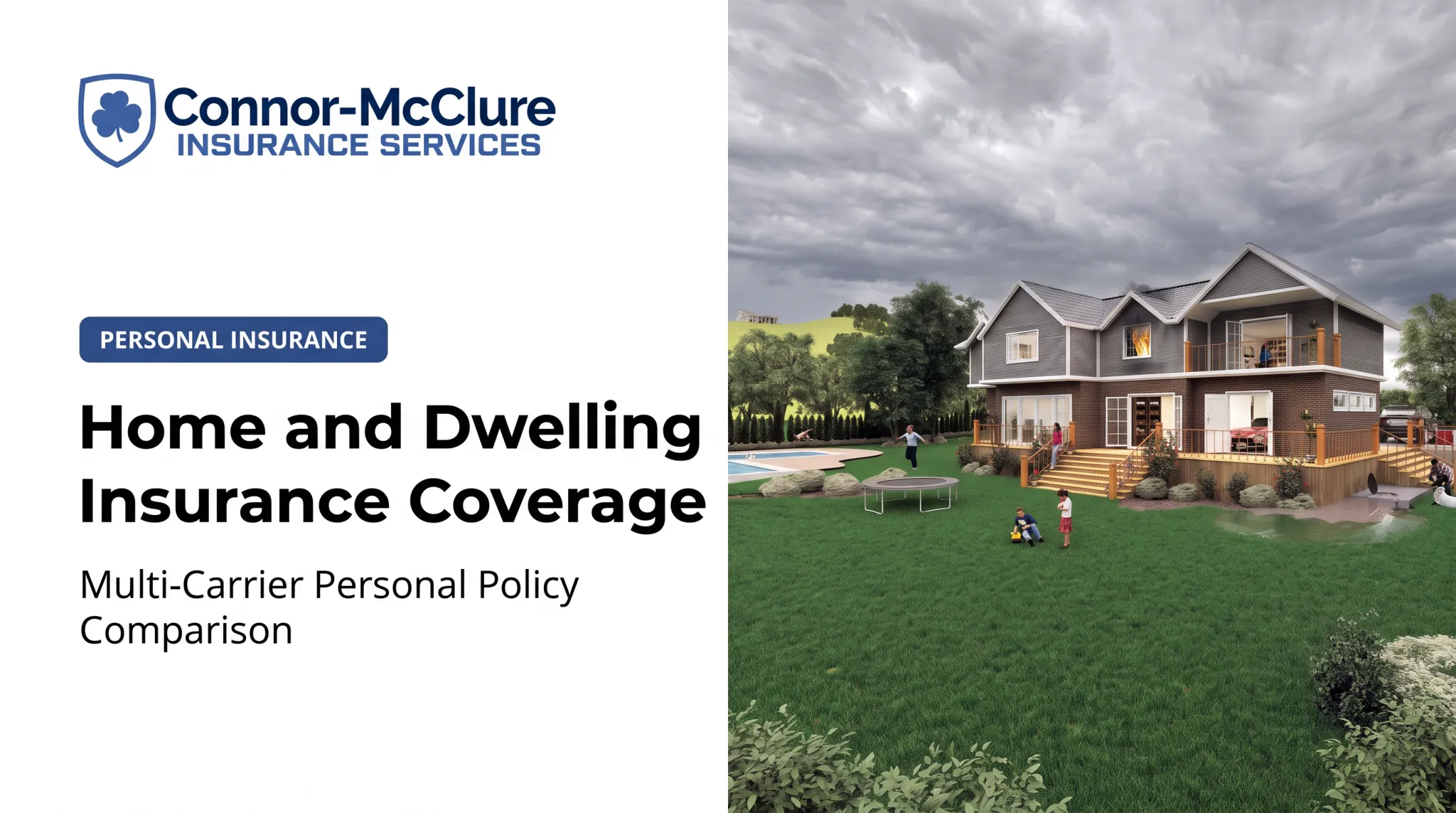
The HO-3 is the most common homeowners insurance form sold in the United States today. It's generally built for eligible owner-occupied residential properties, but availability, eligibility rules, limits, exclusions, and optional endorsements all vary by insurer and state.
This guide breaks down the two coverage standards baked into every HO-3 policy, walks through the six coverage sections, flags common exclusions and sublimits, compares HO-3 to related policy forms, and shows you how to evaluate whether an HO-3 actually fits your home.
Key Takeaways
- HO-3 typically covers the dwelling and detached structures on an open-perils basis, while personal belongings get named-perils coverage
- Standard protections include the home, other structures, personal property, additional living expenses, liability, and medical payments to others
- Flood, earth movement, and wear-and-tear damage usually require separate policies or endorsements
- Limits, deductibles, and valuation methods (not the HO-3 label alone) determine whether coverage is enough
What Is an HO-3 Homeowners Insurance Policy?
HO-3 stands for "Homeowners 3," sometimes called the special form. It's a standardized framework for organizing coverage, not a guarantee that every insurer offers identical protection. Two companies can both sell an HO-3 and still differ meaningfully on exclusions, sublimits, and endorsement options.
The form rests on two different coverage philosophies, and understanding the split matters more than memorizing the form number.
Open-Perils vs. Named-Perils, Explained Simply
Open-perils coverage (used for the dwelling and other structures) works like this: damage is covered unless the policy specifically excludes it. The burden falls on the insurer to point to an exclusion, not on you to prove the cause of loss is listed.
Named-perils coverage (used for personal property) flips that logic. Your belongings are covered only when the damage traces back to a cause of loss the policy specifically lists, such as fire, theft, or windstorm.
Here's a quick example. A tree crashes through your roof during a storm: the structural damage is typically covered because wind and falling objects fall under open-perils protection, subject to the policy's exclusions.
Contrast that with a hairline crack from age that slowly lets water seep into your basement and ruins stored belongings. Gradual deterioration generally isn't a named peril, so contents damage may not be covered.
An HO-3 is not "all-risk" or unlimited coverage. Covered causes of loss are just one piece. Policy limits, deductibles, and claim conditions all shape what you actually collect after a loss, according to the sample HO-3 form published by the Insurance Information Institute.

Before assuming you qualify, confirm your property meets the insurer's eligibility rules. Factors that can affect whether a standard HO-3 is available include:
- Occupancy type
- Construction age and renovations
- Home-based business activity
- Short-term rental use
What Does an HO-3 Policy Cover?
Every HO-3 policy organizes protection into six coverage parts, labeled A through F on the declarations page. The dollar limits attached to each one come from your specific policy, not from the HO-3 label itself.
| Coverage | What It Generally Protects |
|---|---|
| A - Dwelling | The home's structure, attached features, and building materials on-site |
| B - Other Structures | Detached garages, sheds, fences, and similar improvements |
| C - Personal Property | Furniture, clothing, electronics, and other belongings |
| D - Loss of Use | Temporary living expenses when a covered loss makes the home uninhabitable |
| E - Personal Liability | Legal costs if you're responsible for someone else's injury or property damage |
| F - Medical Payments | Guest medical expenses after an accident on your property |
Dwelling and Other Structures (Coverage A and B)
Coverage A should reflect what it costs to rebuild your home, not its market value or sale price. Market value includes land and shifts with real estate conditions. Rebuilding cost depends on local labor and material prices, square footage, and construction details, according to the Insurance Information Institute.
Coverage B typically extends a percentage of Coverage A to structures separated from the main house by open space. Exclusions and limits still apply.
Personal Property (Coverage C)
Belongings are covered only for named perils, and settlement terms matter just as much as the limit itself. Check whether your policy pays actual cash value (factoring in depreciation) or replacement cost (paying to replace the item new). This distinction can mean a difference of thousands of dollars on a claim.
Loss of Use, Liability, and Medical Payments (Coverage D, E, F)
Coverage D reimburses reasonable housing costs, like a hotel stay or temporary rental, while your home is being repaired after a covered loss. Time and dollar limits still apply.
Coverage E and F handle liability claims and guest medical expenses. Intentional acts, business activity on the property, and certain household circumstances can exclude protection entirely.
HO-3 Exclusions, Limits, and Optional Coverage
An HO-3's open-perils design sounds broad, but every form carries a specific list of exclusions. Common ones include:
- Flood and earth movement
- Neglect, wear and tear, and pest damage
- Government action, war, and intentional loss Wording varies by insurer, so always confirm exclusions against your actual policy rather than assuming they match a generic list.
Flood Isn't Just One Thing
Water damage gets treated very differently depending on its source:
- Surface water and storm surge typically fall under the flood exclusion
- Sewer backup and sump overflow are usually excluded unless you've added a specific endorsement
- Sudden plumbing leaks are often covered under the base policy
- Groundwater seepage generally isn't covered at all
Standard homeowners insurance excludes flood damage outright, and separate coverage is available through the National Flood Insurance Program or a private carrier.
Sublimits on Valuables
Most HO-3 policies cap payouts for specific categories like jewelry, cash, firearms, and collectibles, regardless of your overall Coverage C limit. If you own fine art, furs, or valuable jewelry, a personal floater or scheduled coverage endorsement can fill that gap with protection tailored to the item's actual value.
Actual Cash Value vs. Replacement Cost
Depreciation can shrink a claim payment. A five-year-old sofa settled at actual cash value won't pay enough to buy a new one. Replacement cost coverage closes that gap but may require an endorsement, specific eligibility conditions, or proof that you actually replaced the item, per NAIC's consumer guidance.

Common endorsements worth reviewing:
- Water backup and sump overflow coverage
- Service line or equipment breakdown coverage
- Ordinance or law coverage (rebuilding to current code)
- Scheduled personal property for valuables
- Personal umbrella liability for added protection above standard limits
- Separate flood or earthquake policies
Tell your insurer if your situation includes any of the following:
- Home-based business
- Short-term rental
- Vacant property or second home
- Major renovation in progress
These scenarios often fall outside ordinary HO-3 assumptions and may require a different policy or added coverage altogether.
HO-3 Compared With Other Policy Forms
The HO-3 isn't the only homeowners form on the market, and the differences aren't always obvious from the name alone.
| Form | Key Distinction |
|---|---|
| HO-2 | Named-perils coverage for both dwelling and contents (narrower than HO-3) |
| HO-3 | Open-perils dwelling, named-perils contents |
| HO-5 | Open-perils coverage for both dwelling and contents (broader than HO-3) |
| HO-6 | Built for condo unit owners; coordinates with the association's master policy |
| DP-3 | Commonly used for non-owner-occupied or dwelling-fire situations |
HO-3 vs. HO-5
The real difference comes down to personal property. HO-5 generally extends open-perils protection to belongings too, not just the structure.
That broader protection often costs more, and eligibility varies by insurer. Compare actual policy wording rather than assuming HO-5 is automatically better.
HO-3 vs. HO-6
If you own a condo, HO-3 usually isn't the right form. HO-6 is designed around unit-owner interests, covering your personal property and often the interior walls, floors, and ceilings.
The association's master policy typically covers common areas like hallways and elevators, so you'll need to coordinate the two to avoid gaps or overlaps.
HO-3 vs. DP-3
DP-3 is commonly associated with dwelling-fire policies for non-owner-occupied properties, such as a rental you don't live in. An HO-3 is generally built for owner-occupied homes. Occupancy status and carrier-specific rules determine which one actually applies to your property.
Bottom line: Don't choose a form based on its number or the quoted premium alone. Compare actual limits, exclusions, valuation methods, deductibles, and available endorsements side by side.
How to Choose and Get an HO-3 Policy
Getting the right HO-3 starts well before you request a quote.
Build Your Pre-Quote Checklist
Gather details on:
- Home basics - age, square footage, construction type, and roof condition
- Systems - heating, electrical, and plumbing age and condition
- Extras - detached structures, recent renovations, and safety features
- History - occupancy status, mortgage requirements, and prior claims
Estimate Your Coverage Limits
Set Coverage A using current local rebuilding costs, not your home's sale price.
Build a home inventory with photos, receipts, and serial numbers so you can estimate Coverage C accurately. Get appraisals for items valuable enough to need scheduled coverage.
For liability limits, weigh your total assets and realistic lawsuit exposure rather than the insurer's default number.

Compare Quotes Fairly
A lower premium means nothing if the coverage underneath it is thinner. When comparing quotes, match:
- Equivalent dwelling and personal property limits
- The same deductible structure
- Identical valuation methods (actual cash value vs. replacement cost)
- Comparable exclusions and available endorsements
An independent insurance agency can walk through these comparisons with you and flag whether an HO-3 or a different form actually fits your property and your risk tolerance.
Connor-McClure Insurance Services helps homeowners across its licensed states with these comparisons. As an independent agency, we shop multiple carriers, explain how each policy's limits and exclusions stack up, and help you find coverage that matches your actual risk, not just a generic package.
If you're in one of our licensed states, call 908-782-3800 or reach out through info@connor-mcclure.com to talk through your options. Not every product is available in every state we serve, so a conversation up front saves time later.
Review Coverage Annually
Your HO-3 isn't a "set it and forget it" purchase. Revisit your policy after:
- A renovation or major purchase
- Marriage or other household changes
- Starting a home-based business
- A change in occupancy or rental activity
- Rising local rebuilding costs
Frequently Asked Questions
What is HO-3 homeowners insurance?
HO-3 is the most common homeowners policy form in the U.S., generally offering open-perils coverage for the dwelling and named-perils coverage for personal property. Exact terms depend on your specific policy and insurer.
What does an HO-3 homeowners policy cover?
It typically covers the home, detached structures, personal belongings, additional living expenses, personal liability, and medical payments to others. Limits, exclusions, and sublimits apply to each section.
Which property is excluded under an HO-3 policy?
Common exclusions include flood, earth movement, neglect, and intentional loss, with sublimits on categories like jewelry and cash. Always check your specific policy's exclusions and endorsement options rather than assuming full coverage.
Is HO-3 insurance good?
HO-3 is a solid, widely used option for many eligible homeowners. Whether it's the right fit depends on your property, belongings, risk exposure, and the specific limits and deductibles you choose.
Which is better, HO-3 or HO-5?
HO-5 generally offers broader open-perils protection for personal belongings, while HO-3 tends to be more budget-friendly. The right choice depends on your assets, budget, and what each insurer actually offers.
What is HO-3 vs. HO-6 insurance?
HO-3 is generally built for owner-occupied houses, while HO-6 is designed for condo unit owners and must be coordinated with the association's master policy to avoid coverage gaps.