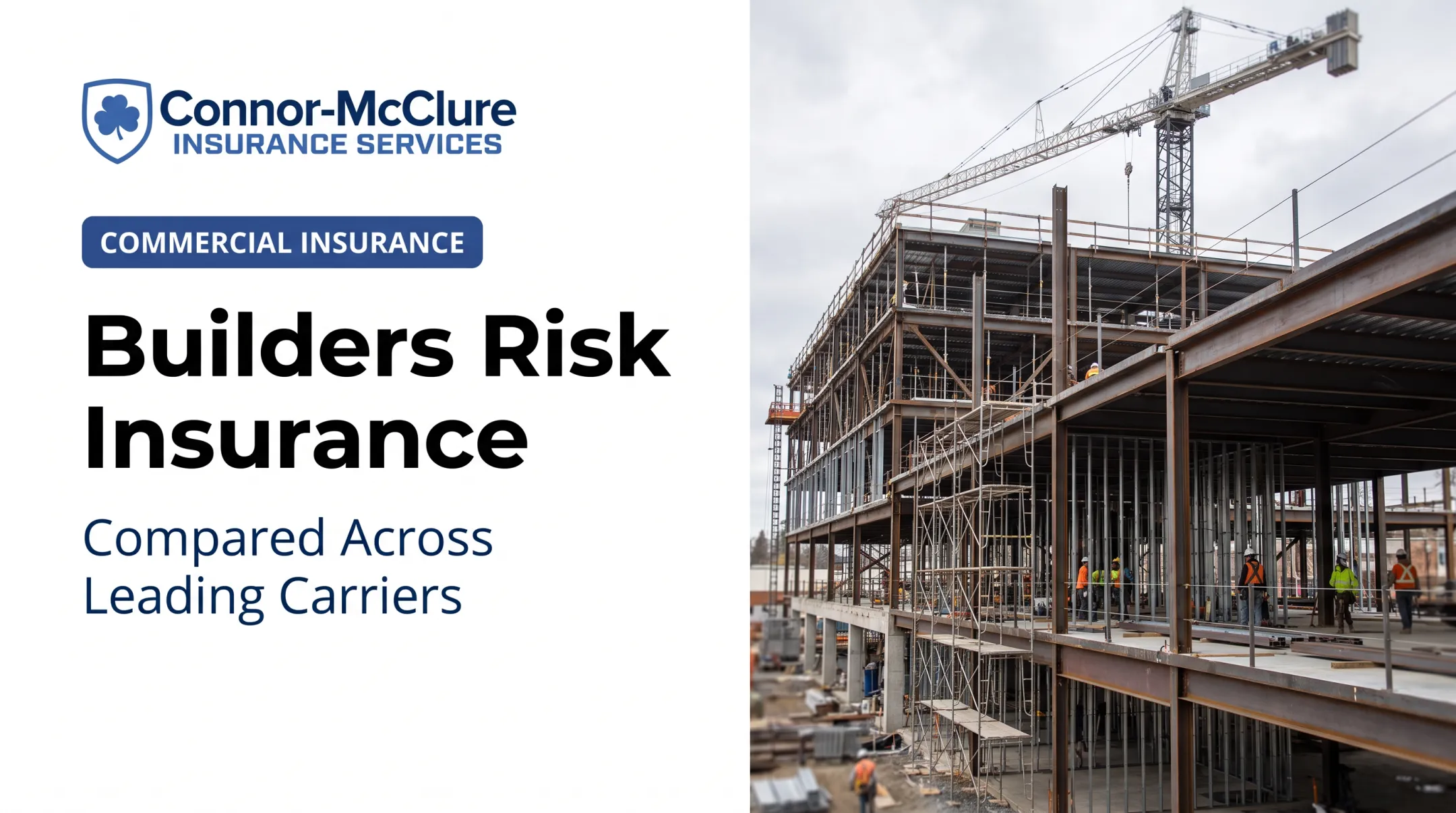
Here's the problem many owners and contractors run into. Your standard homeowners policy, commercial property policy, or general liability coverage usually won't protect an unfinished structure, the materials sitting on-site, or the unique exposures that come with active construction. A framed-out house isn't a "home" yet in the eyes of most insurers, and that gap can be expensive if a fire, storm, or theft hits mid-project.
This guide walks through what builders risk actually covers, what it excludes, who's responsible for buying it, when coverage needs to start, what drives the cost, and how to prepare before you request a quote.
Key Takeaways
- Builders risk is first-party property coverage for the structure and materials, not a substitute for general liability or workers' compensation
- The owner, developer, or contractor named in the construction contract typically arranges the policy
- Coverage should be in place before work or material deliveries begin, and reviewed if the project timeline or scope changes
- Compare completed value, covered perils, deductibles, and the coverage end trigger, not just the premium
What Is Course of Construction Insurance?
Course of construction insurance, builders risk insurance, and builder's risk insurance all refer to the same category of coverage in the U.S. insurance market. The name on the quote doesn't tell you what's actually protected: that comes down to the policy wording itself. As IRMI's policy definition points out, there's no single standardized builders risk form, so two policies with similar names can cover very different things.
The purpose is straightforward: protect a project while it's incomplete and more exposed than a finished building. Unfinished structures face a different risk profile than occupied ones. Open framing, unsecured materials, and active job sites invite fire, theft, vandalism, storm damage, and accidental losses that a completed building simply isn't as vulnerable to.
Who has an insurable interest? Several parties might, depending on the project:
- Homeowners and property owners
- Developers and general contractors
- Construction managers and subcontractors
- Lenders financing the project
The construction contract, not assumption, determines who's responsible for purchasing coverage and which parties need to be named.
When Coverage Starts and Ends
Coverage typically begins around the start of work or whenever the insured becomes financially responsible for project property, whichever a given form specifies. It generally ends at one of several triggers: completion, occupancy, intended use, policy expiration, or abandonment of the project.

Before binding a policy, confirm the insurer's exact definitions for:
- "Commencement" and "completion"
- "Occupancy" and "substantial completion"
- Abandonment provisions
- Coverage treatment for delayed projects
Your policy limit should reflect the anticipated completed value of the project (construction costs, materials, labor, and covered improvements) while generally excluding land value. Setting the limit too low based on current spend rather than final value is a common and costly mistake.
What Does Builders Risk Insurance Cover?
Builders risk coverage centers on the physical property tied to the project. That typically includes:
- The structure under construction, including foundations and permanent fixtures
- Installed systems (plumbing, electrical, HVAC)
- Building materials and supplies intended to become part of the finished structure
- Equipment awaiting installation
Most policies use an all-risk or open-perils approach, meaning a loss is covered unless specifically excluded, not that every possible loss is automatically included. Commonly covered causes of loss include fire, lightning, explosion, windstorm, hail, theft, vandalism, smoke, and vehicle impact.
Property Away From the Main Site
Materials in transit or sitting in off-site storage can often be covered, but these extensions usually come with their own rules: location restrictions, security requirements, valuation methods, and sublimits. Don't assume a shipment of lumber sitting in a supplier's warehouse is automatically covered at the same limit as materials on-site.
Temporary structures (scaffolding, fencing, forms, site trailers, construction signs) may also be covered, but only when the policy or an endorsement specifically says so.
Extensions Worth Reviewing on Larger Projects
For bigger or more complex builds, ask about:
- Debris removal, demolition, and pollutant cleanup
- Ordinance or law and expedited construction expenses
- Testing and preservation-of-property costs
- Cost escalation coverage
Soft-cost or delay coverage (additional interest, permits, taxes, lost rental income, or financing expenses) is a separate category entirely. It only applies when specifically included in the policy and triggered by a covered physical loss, not just because a project runs late.
Theft deserves particular attention. An Insurance Journal claims report found theft to be the most frequent builders risk claim in the account reviewed, followed by water damage and fire. That's a strong argument for tightening site security and documenting materials carefully, especially during framing and finishing stages when valuable fixtures sit exposed.

What Builders Risk Insurance Does Not Cover
This is where confusion causes real problems. Builders risk is property coverage: it is not liability insurance, and it won't protect against every construction-related exposure.
It generally excludes:
- Third-party bodily injury or damage to neighboring property (that's commercial general liability territory)
- The contractor's own tools, mobile equipment, and vehicles
- Employee injuries (workers' compensation handles this)
- Faulty design, defective materials, or faulty workmanship
- Wear and tear, corrosion, and mechanical breakdown
- Employee theft, war, and nuclear hazards
Flood, earthquake, named windstorm, and terrorism are frequently excluded or restricted, though they may be available as endorsements depending on the insurer and project location.
The Faulty-Work Distinction
Here's a nuance worth slowing down on. The cost to correct defective workmanship is typically excluded. But resulting physical damage caused by a covered peril (sometimes called an "ensuing loss") may or may not be covered, depending on the specific policy wording. Don't assume either way. Read the actual provision.
A quick example to illustrate why multiple policies matter:
- A pallet of copper fixtures gets stolen from the site → builders risk may respond
- A worker falls and is injured → workers' compensation applies
- A subcontractor backs an excavator into a dumpster, damaging it → contractors' equipment coverage, not builders risk
- An engineer's calculation error causes a structural issue → professional liability, not builders risk
Four different losses, four different policies. That's the reality of construction risk.
Who Buys Builders Risk Insurance and When Does Coverage Apply?
Responsibility for purchasing builders risk usually comes down to the owner-contractor agreement, lender requirements, or construction loan documents. Don't assume the contractor has it handled, and don't assume the owner does either. Confirm it in writing.
Parties whose interests may need to appear on the policy:
- Owner or developer (often the named insured)
- General contractor and subcontractors
- Construction manager
- Lender (often as a loss payee)
Named insured, additional insured, and loss payee are different roles with different rights. Mixing them up can leave a stakeholder unprotected even if a policy technically exists.
Timing Matters More Than People Expect
Coverage should be arranged before work begins and before materials start arriving. According to AGC's best-practices checklist, insurers may restrict or decline projects that are already underway, or require inspections, dated photos, and progress reports to fill the gap.
Once coverage is in place, notify your insurer about material changes, including:
- Construction delays or revised completion dates
- Changes in project scope or value
- Changes in occupancy plans
- Extended storage periods or site abandonment
When the project wraps, builders risk typically terminates at completion or occupancy. Line up homeowners, commercial property, or vacant-property coverage before the temporary policy expires, not after. A gap here, even a short one, leaves a finished building unprotected.

Policy triggers and legal or contractual requirements vary by state, lender, and insurer, so confirm the specifics for your project rather than relying on general assumptions.
How Much Does Builders Risk Insurance Cost and How Do You Choose a Policy?
There's no universal builders risk premium, and anyone quoting you a fixed percentage without knowing your project details is guessing. Pricing depends on a mix of factors specific to your build.
Major pricing and underwriting factors:
- Completed project value
- New construction versus renovation
- Building type and construction materials
- Project duration and location
- Catastrophe exposure and site security
- Contractor experience
- Selected deductibles, limits, and endorsements
Set your limit using the current project budget and anticipated completed replacement value, then factor in material price changes, labor, debris removal, and any soft costs you've chosen to include.
Policy Comparison Checklist
Before signing anything, compare:
- Covered property, valuation basis, and covered perils across quotes
- Deductibles, sublimits, and exclusions, especially for materials in transit and temporary structures
- Soft-cost and delay coverage availability, plus ordinance or law and flood/earthquake options
- The exact coverage end trigger (completion, occupancy, or expiration)
- Whether contractor tools, vehicles, employee injuries, and third-party liability are handled by separate policies
- Accurate documentation of all contractually required parties and lender interests
Coordinating builders risk alongside liability, equipment, and auto coverage across multiple carriers gets complicated fast, particularly on larger projects with several contractually required parties. This is where an independent agency earns its keep: comparing options across carriers rather than pushing one form.

Connor-McClure Insurance Services takes a professional, client-focused approach to builders risk and related construction coverage, with licensing across 17 U.S. states. Project eligibility still depends on underwriting and state availability, so coverage isn't automatic everywhere. If you're planning a build or renovation, contact Connor-McClure Insurance Services at 908-782-3800 or info@connor-mcclure.com to discuss your project and compare suitable options.
Frequently Asked Questions
What kind of insurance do I need while building a house?
A new build or major renovation usually needs builders risk coverage for the structure and materials, plus separate liability, workers' compensation, auto, or equipment policies depending on who's involved. The right mix depends on your contract and the parties doing the work.
What does builder's risk coverage cover?
It generally covers the unfinished structure, permanent materials, supplies, fixtures, and sometimes temporary or off-site property against covered physical losses. Exact coverage always depends on the specific policy and any endorsements attached.
Is building insurance the same as homeowners insurance?
No. Builders risk is temporary coverage during construction, while homeowners insurance is built for an occupied, completed residence. Homeowners policies commonly exclude or limit coverage during major construction activity.
What is not covered under building insurance?
Common gaps include third-party liability, worker injuries, contractor tools and vehicles, faulty workmanship, and ordinary wear and tear. Certain catastrophes like flood or earthquake may also be excluded unless added by endorsement.
How much should you cover for building insurance?
Your limit should reflect the anticipated completed replacement value and applicable project costs, not just what you've spent so far. Review the estimate with a licensed insurance professional before finalizing your limit.
Is it cheaper to insure a new construction home?
Not necessarily. Price depends on project value, location, construction type, duration, deductible, and selected coverage — new construction isn't automatically cheaper to insure than a renovation. Compare actual quotes rather than assuming either way.