Introduction
A fire tears through a half-finished townhouse. A storm floods a renovation site and ruins pallets of drywall still waiting to be installed. A theft ring strips newly delivered copper wiring from an unlocked job trailer.
None of these losses are covered by a standard homeowners or commercial property policy, because the structure isn't finished and isn't occupied yet. Standard property insurance is built around completed buildings — not works in progress.
Builders risk insurance fills that gap. It's temporary property coverage for a structure, its materials, and related project property while construction, renovation, or installation work is underway.
This guide covers what the policy typically includes and excludes, who should carry it, how it differs from liability coverage, what drives the premium, and how to evaluate a policy before you sign one.
Key Takeaways
- Builders risk protects project property; general liability handles third-party injury and damage claims
- Coverage, exclusions, deductibles, and sublimits vary significantly by insurer and project type
- Construction contracts should specify who purchases coverage before materials or work begins
- Compare policy terms, not just price : confirm values, locations, and timing match the project
- Flood, earthquake, and worker injuries typically require separate coverage
What Is Builders Risk Insurance and Who Needs It?
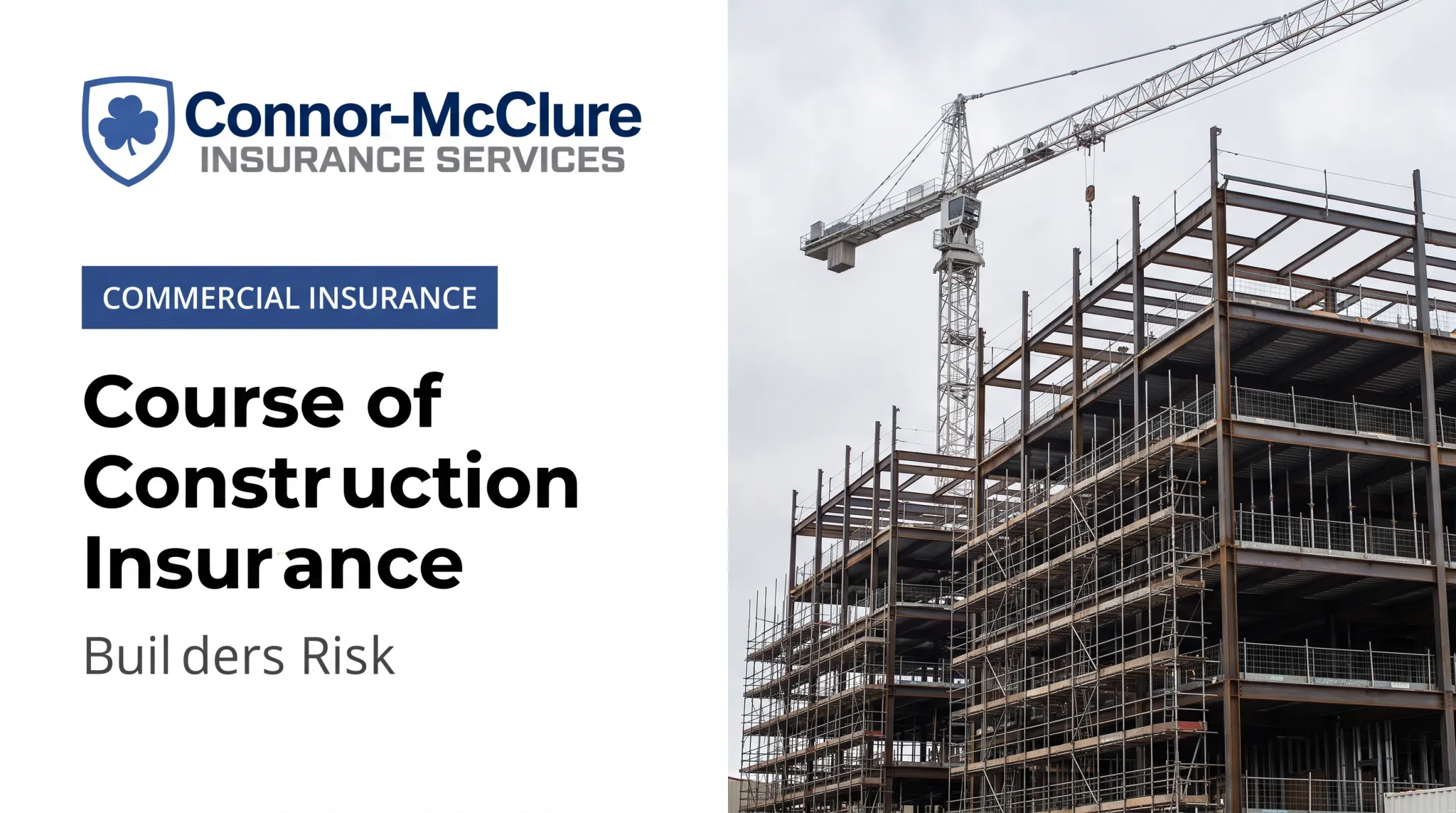
Builders risk goes by several names: builder's risk, course of construction insurance, and sometimes inland marine coverage. IRMI notes there's no single standard policy form: wording and structure vary by carrier, so the label on a quote matters less than what's actually written into the policy.
This is first-party property protection. It responds when the building itself, or property tied to the project, suffers a covered physical loss during construction.
Who typically buys or is named on the policy
Several parties often have a financial stake in a project and show up on the policy:
- Property owners developing or renovating a building
- General contractors managing the work
- Subcontractors with materials or labor investment on-site
- Construction managers overseeing multiple trades
- Lenders financing the project, often as loss payees
- Owner-builders managing their own construction
Why existing property insurance usually isn't enough
Many owners assume their homeowners or commercial property policy already protects a project. It often doesn't. Construction activity is frequently excluded or sharply limited under those policies, since insurers underwrite finished, occupied structures differently than active job sites.
A simple example: a fire breaks out in an unfinished building, destroying framing lumber and electrical materials stored on-site. Those physical losses typically fall under builders risk. But if a worker is injured in that same fire, that's a workers' compensation or liability matter, not a builders risk claim.
Contractors juggling several jobs at once may also want to compare a project-specific policy against a blanket or reporting-form option that covers multiple eligible projects under one program.
What Does Builders Risk Insurance Cover — and What Does It Exclude?
Coverage generally centers on the physical project, but the exact list depends on the policy.
Property typically covered
Most builders risk policies are built around:
- The structure under construction, including foundations and fixtures
- Permanently installed equipment
- Building materials on-site
- Temporary structures, scaffolding, and forms
- Materials in transit or at approved off-site storage, often with limits
Travelers' builders' risk overview describes covered perils that commonly include fire, lightning, explosion, theft, vandalism, wind, hail, and collapse tied to a covered cause. Water damage coverage varies, so verify it against the specific policy.
Hard costs versus soft costs
This distinction trips up a lot of buyers.
Hard costs are the physical rebuilding expenses: materials, labor, and structure replacement. These are usually the default coverage.
Soft costs are financial losses tied to a delay: additional loan interest, lost rental income, taxes, or design fees. Soft-cost coverage is not automatic. It generally requires a separate endorsement with its own limit, so don't assume it's baked into a standard quote.

What's usually excluded
Common exclusions include:
- Bodily injury and third-party liability claims
- Workers' compensation obligations
- Contractor tools and mobile equipment
- Faulty design or defective workmanship
- Wear and tear, mechanical breakdown, or pre-existing damage
- Flood, earthquake, and earth movement, unless specifically added back
"All risk" or "special form" does not mean every loss is covered. It means the policy covers losses unless they are specifically excluded, and the exclusion list is usually long. Review deductibles, sublimits, and valuation terms with an insurance professional rather than assuming the broad label covers everything.
When Does Coverage Apply, and What Should the Contract Specify?
Builders risk isn't open-ended. It has a defined start and a defined end, and both need confirmation before anyone breaks ground.
Start and end points
Coverage typically begins at the policy's effective date, contract execution, or first delivery of materials, depending on policy wording. It usually ends at:
- Policy expiration
- Substantial completion or occupancy
- The building being put to its intended use
- Cancellation or another specified trigger
Trying to buy coverage after construction has already started can complicate underwriting. Insurers may ask for progress reports, dated photographs, or a site inspection before quoting, so it's worth arranging coverage before the first delivery truck shows up.
What belongs in the construction contract
The owner-contractor agreement should spell out:
- Who purchases the policy and who pays the premium
- Required coverage limits and covered locations
- The policy period, matched to the realistic project timeline
- Required endorsements, such as soft costs or off-site storage
- How named insureds, additional insureds, and lenders are coordinated between the contract and the policy
Lenders, public-project specifications, and private contracts often require builders risk even when no general law mandates it. Freddie Mac's Multifamily Guide requires builders risk on new construction and major renovation work when the borrower's primary property policy doesn't already cover construction activity. That requirement is a useful illustration of how lending rules can drive the purchase decision even on private deals.
Builders Risk, Liability, and Other Insurance You May Need
Builders risk is often mistaken for a catch-all construction policy. It isn't. It's one piece of a broader insurance picture.
Builders risk vs. general liability
The Hartford's comparison draws a clean line: builders risk covers physical damage to the project itself, while general liability addresses third-party bodily injury, property damage, and personal injury claims brought against the contractor or owner. A visitor who trips on-site and gets hurt is a liability matter, not a builders risk claim.

Other coverage gaps to close
- Workers' compensation: covers employee injuries where legally required; builders risk does not protect workers
- Contractors equipment or inland marine coverage: protects owned or rented tools and mobile equipment, which builders risk typically excludes
- Professional liability / errors and omissions: covers design or engineering mistakes, which property coverage doesn't touch
- Commercial auto: for vehicles used in the business
- Flood, earthquake, or ordinance and law coverage: often needed as add-ons depending on location
A note on terminology
Outside the U.S., "contractors all risk" often describes a broader policy combining project property and liability protection in one form. U.S. buyers who encounter that term on an international project should examine the actual coverage form rather than assume it matches U.S. builders risk conventions.
How Much Does Builders Risk Insurance Cost?
There's no flat industry rate for builders risk. Pricing is project-specific and depends on:
- Completed project value
- Construction type and scope
- Location and project duration
- Occupancy plans during construction
- Site risk controls and prior loss history
- Deductible level and selected endorsements
New construction, structural remodeling, and renovation of an existing building each present different underwriting considerations. A gut renovation in an occupied building isn't priced like ground-up construction on vacant land.
What pushes the premium up or down
Adding soft costs, materials-in-transit coverage, off-site storage, flood or earthquake protection, or higher limits all affect the quote. So does the deductible you choose: a higher deductible generally lowers the premium but increases your out-of-pocket exposure on a claim.
One detail owners frequently miss: the policy limit should match the completed project value, not the current construction cost. If the declared value is too low, you risk coinsurance penalties or inadequate protection if material prices rise mid-project.

When comparing quotes, make sure limits, exclusions, endorsements, and valuation terms actually match. A cheaper premium with a lower limit or narrower endorsement list isn't necessarily the better deal.
How to Choose, Apply, and Manage Risk on Your Construction Project
Getting a builders risk policy right starts with having the right information ready, and continues with how you manage the project afterward.
Information to gather before requesting quotes
- Project address and type of work
- Owner and contractor details
- Construction materials and total completed value
- Existing-structure value, if renovating
- Start and completion dates
- Occupancy plans and construction percentage completed
- Lender requirements, site security, and storage or transit arrangements
What to check before you sign
Review the policy for:
- Covered property and causes of loss
- Exclusions, deductibles, limits, and sublimits
- Replacement-cost treatment and soft costs
- Transit and storage coverage
- Process for adding change orders
An independent agent can help compare options across multiple carriers, interpret the fine print, and coordinate certificates for lenders and other interested parties. Not every agency has access to every market, so ask directly about carrier relationships and construction-insurance experience.
Keeping the project protected day to day
A few practical habits reduce claim friction and underwriting headaches:
- Keep an itemized inventory of materials, fixtures, and equipment, noting storage location and delivery date
- Secure the site with fencing, lighting, locked storage, and documented inspections
- Retain paperwork: contracts, permits, progress photos, and subcontractor certificates all support claims and underwriting
- Update your agent whenever scope, budget, timeline, or occupancy status changes
- Confirm the transition date to permanent property coverage once the project reaches completion or occupancy
Connor-McClure Insurance Services helps clients understand the risks tied to a construction project and compare insurance options suited to their specific requirements. The agency is licensed in 17 U.S. states. If you're planning a build, renovation, or installation project, call 908-782-3800 or email info@connor-mcclure.com to talk through your options.
Frequently Asked Questions
How much does builders risk insurance cost?
Cost depends on project value, construction type, location, duration, materials, deductible, and any optional coverages added. There's no standard rate — request a project-specific quote for an accurate figure.
What does builders risk insurance cover?
It generally covers physical damage to the structure, materials, fixtures, and permanently installed equipment from covered causes like fire, theft, or wind. Exclusions and available endorsements vary by insurer, so review the policy wording closely.
Do I need a builder's risk policy?
Lenders, property owners, or construction contracts frequently require it. Even without a mandate, it's worth evaluating any time a building is under construction, being remodeled, or materially altered.
Is builder's risk the same as liability?
No. Builders risk covers physical damage to project property, while liability insurance covers third-party bodily injury and property-damage claims against you. Most construction projects need both.
What insurance do I need as a builder or contractor?
Builders risk where you have project property responsibilities, plus general liability, workers' compensation where required, commercial auto, and contractors equipment coverage. Professional liability or pollution coverage may apply depending on your work.
What is contractor's all risk insurance?
This term is common in non-U.S. markets and often describes a broader policy combining project property and liability coverage. U.S. buyers encountering this label should confirm exactly what the policy includes rather than assume it matches domestic builders risk coverage.